


The importance of forklift safety management in the textile and footwear industry
The textile and footwear industries are labor-intensive sectors, where factory spaces are often cramped, while the need for lifting and transporting goods by forklift (such as fabric rolls, finished-goods pallets, and raw and auxiliary materials) occurs continuously. For this reason, forklifts become one of the major sources of serious occupational accident risks if they are not managed and controlled with strict safety measures.
In practice, forklift accidents in textile and footwear factories often occur due to forklifts moving while carrying loads at excessive heights, obstructed operator visibility, shared pathways between forklifts and workers, or workers’ lack of attention when moving through areas where forklifts are operating.
A particularly dangerous characteristic of this industry is that many workers do not operate forklifts themselves but work and move in close proximity to areas where forklifts are operating. Without clear traffic segregation, proper signage, established rules, and strict supervision, even a single unsafe behavior—such as walking too close to a forklift, using a mobile phone while moving, or standing within the lifting zone—can lead to fatal accidents.
In reality, throughout 2025, multiple forklift-related accidents have been consecutively recorded in textile and footwear factories. The consequences of these accidents have been extremely serious, causing severe injuries and fatalities, while also disrupting production and significantly affecting corporate reputation.
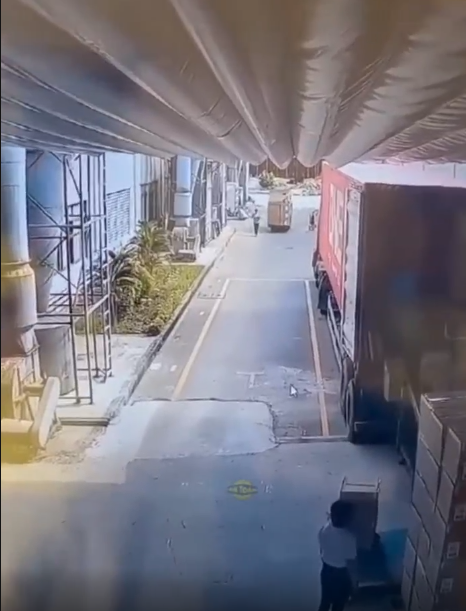
A forklift carrying a high load, obstructing visibility, ran over and killed a worker.
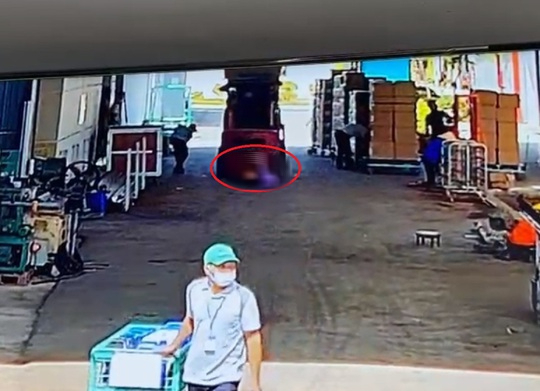
A forklift reversing without proper observation ran over and killed a worker.
Legal regulations on the management and safe use of forklift trucks
According to QCVN 25:2015/BLĐTBXH – the National Technical Regulation on Occupational Safety for Forklift Trucks, Section 3.6 stipulates that the management and use of forklifts must comply with the following basic requirements:
-
Forklifts are only permitted to be put into operation after they have undergone technical safety inspection, have a valid inspection certificate, and fully meet the technical requirements specified in the regulation.
-
Forklift operators must be properly trained and instructed in occupational safety, hold appropriate certification, and be formally assigned in writing by the employer.
-
Forklifts must be used for their intended purpose and within the permitted load capacity, and must not be used to lift people or to perform tasks beyond their designed functions.
-
When lifting and transporting loads, the goods must be properly secured and stable, must not obstruct the operator’s visibility, and the forklift must not be moved while the load is raised to a dangerous height.
-
Areas where forklifts operate must be properly organized and arranged, with appropriate signage, floor markings, and measures in place to restrict unauthorized personnel from entering hazardous zones.
-
Forklifts must undergo technical inspection before each work shift and be maintained and repaired periodically in accordance with the manufacturer’s instructions and legal requirements.
These requirements are particularly important for the textile and footwear industry, where many workers do not directly operate forklifts but work in close proximity to forklift operating areas. Any lack of traffic segregation, inadequate supervision, or violation of procedures can significantly increase the risk of serious accidents.