


IFC – Vietnam’s garment industry is one of the key pillars of the national economy, contributing billions of US dollars in export value each year and providing employment for nearly 2.5 million workers across more than 6,000 factories nationwide.
Amid intense competition for labor, increasingly demanding requirements from global brands, and changes in the labor regulatory framework, attracting and retaining workers has become a major challenge for enterprises in the sector.
The report “The Threads That Bind: Weaving Respect into Workplace Culture and Impact in Viet Nam’s Garment Sector”, published by the International Finance Corporation (IFC) in September 2025, documents the results of a two-year collaborative program (2022–2024) between IFC, a global retailer, and 15 garment factories in Vietnam, involving more than 10,000 workers.

Context and Rationale for Intervention
Initial diagnostic research conducted under the program revealed that workplace violence and harassment—including bullying, sexual harassment, and online violence—had been significantly affecting workers’ productivity, engagement, and well-being. On average, one in three workers surveyed reported experiencing at least one form of violence or harassment, and 15% had considered leaving their jobs due to these experiences.
This served as a “wake-up call” for many factories, as existing policies—particularly policies on sexual harassment—were found to be insufficient and not well aligned with workplace realities.
The “Respectful Workplaces” Program Approach
IFC implemented the program using a comprehensive approach that included:
-
Assessing the situation through worker surveys and interviews;
-
Improving policies and procedures to prevent and address workplace violence and harassment;
-
Training “contact teams” at each factory—comprising representatives of different genders, roles, and levels—to receive and handle complaints using a survivor-centered approach;
-
Raising awareness among all workers through internal communications and creative activities, notably 63 interactive theatre performances delivered at factories by ATH Drama for Change over the two-year period.
Results and Impacts
By the end of the program, all 15 participating factories had adopted a “Respectful Workplace” policy, and 92% of contact team members reported confidence in handling cases related to violence and harassment.
Quantitative results showed a clear shift in workplace culture:
-
The proportion of workers experiencing violence or harassment dropped from 34% to 13%;
-
The share of workers feeling fatigued, distracted, or experiencing health impacts due to these issues was reduced by half;
-
The percentage of workers considering leaving their jobs due to violence or harassment fell from 15% to 7%.
Notably, 99% of endline survey respondents said they trusted the grievance handling mechanisms, and workers’ willingness to seek support from company representatives nearly doubled.
Lessons for Enterprises and Supply Chains
The report confirms that building a respectful workplace culture is not only a matter of compliance or corporate social responsibility, but also delivers clear business benefits: improved productivity, reduced absenteeism and workplace accidents, stronger worker retention, and a more resilient position within global supply chains.
For Vietnam’s garment sector—highly dependent on female workers and international orders—this approach points to an important pathway: moving beyond compliance toward a safe, respectful, and sustainable working environment where workers are heard and businesses can grow over the long term.
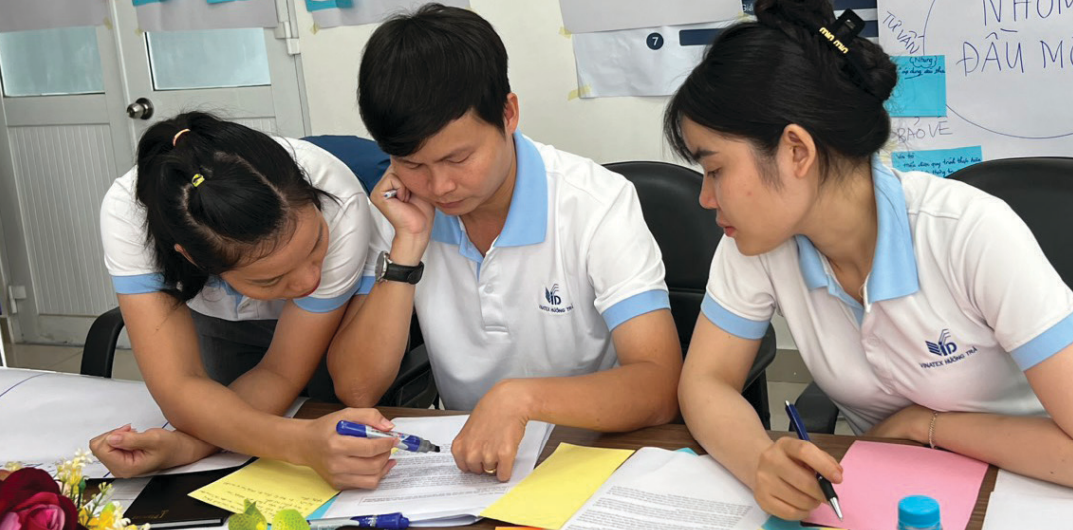
👉 Building a Culture of Respect in the Workplace with RBV
Drawing on practical lessons from Vietnam’s garment industry, RBV delivers training on building a respectful workplace culture to help enterprises prevent and effectively respond to violence, harassment, and discrimination, while strengthening worker engagement and performance.
RBV’s training programs:
-
Equip leaders, managers, and HR teams with practical knowledge and tools;
-
Support enterprises in developing and implementing internal policies aligned with international standards and Vietnamese law;
-
Promote a safe, respectful, and sustainable working environment that links social responsibility with business performance.
👉 Learn more and register for RBV’s training program to begin your journey toward building a respectful workplace culture—where workers are heard and enterprises thrive in the long term.