


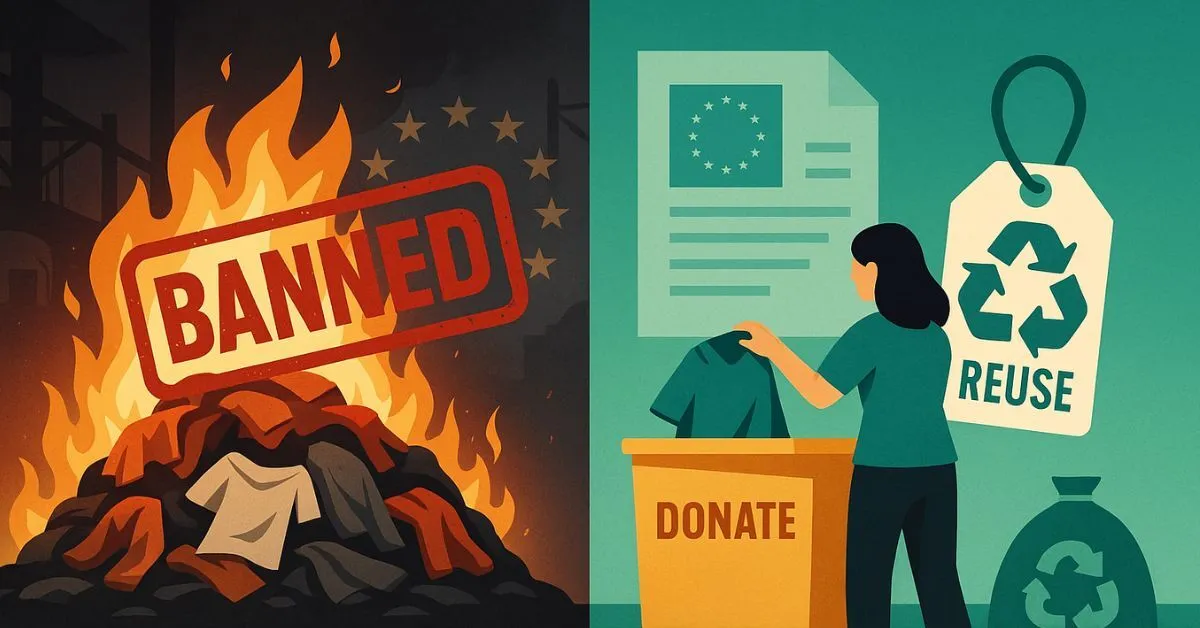
On February 9, 2026, the European Commission officially adopted new rules under the Ecodesign for Sustainable Products Regulation (ESPR) aimed at preventing the destruction of unsold essential goods, particularly clothing, accessories, and footwear — one of the significant sources of resource waste and greenhouse gas emissions across the Union.
Why Did the EU Introduce This Regulation?
Each year in the EU, approximately 4–9% of unsold textile products are destroyed before ever being used, contributing to around 5.6 million tonnes of CO₂ emissions — an amount comparable to the total net emissions of a country such as Sweden in 2021.
The “take-make-dispose” business model (extract — produce — discard) has led to severe resource waste and has made the fashion industry one of the most polluting sectors in the world. The new regulation aims to eliminate this model by promoting sustainable business practices and advancing the circular economy.
Key Points of the New Regulation
🔹 Ban on the Destruction of Unsold Clothing and Footwear
Large companies will be prohibited from destroying unsold inventory such as clothing, accessories, and footwear through conventional methods — including incineration or landfilling — starting from July 19, 2026. The regulation will apply to small and medium-sized enterprises (SMEs) from 2030 onward.
🔹 Transparency Requirements
Under the ESPR, companies must disclose data on unsold inventory and provide information about discarded products, enabling authorities to monitor and supervise compliance. A standardized reporting format will take effect from February 2027.
🔹 Conditional Exemptions
In certain exceptional cases, such as products that are damaged or pose safety risks, destruction may still be permitted — but only with justified reasons and under strict supervision by the relevant authorities.
Benefits for Businesses and the Environment
Reduced Waste and Emissions
The ban on destroying unsold goods will help reduce waste volumes and lower CO₂ emissions, while encouraging companies to adopt more effective product management strategies.
Promotion of the Circular Economy
Businesses are encouraged to implement solutions such as reuse, remanufacturing, resale, or donation of products — aligning with sustainable development goals and enhancing competitiveness.
Fair Competition for Sustainable Businesses
Companies that have already invested in circular economy models will no longer face unfair competition from those continuing wasteful production and disposal practices.
How Should Businesses Prepare?
👉 Standardize inventory management processes and improve demand forecasting to minimize overstock.
👉 Develop sustainable business models such as recycling services, repair programs, or resale channels.
👉 Upgrade reporting systems in line with new EU standards from 2027 to ensure compliance with transparency requirements on unsold inventory data.
The EU’s new regulation represents not only a major step forward in environmental protection and the promotion of the circular economy, but also a strategic shift in how the fashion and retail industries operate within the European market. Transitioning from a “take-and-dispose” consumption model to a more sustainable, reuse-oriented economy is essential to addressing resource scarcity and climate change in the near future.